
What is Kiln Dried Sand How Do You Use It?
Kiln dried sand is very dry fine sand that contains no moisture. The sand is used to fill the joints of block paving and paving slabs. By filling the joints with dried sand you keep the structure of the paving rigid and strong. It also stops the ingress of water & stops the paving from moving and becoming loose.
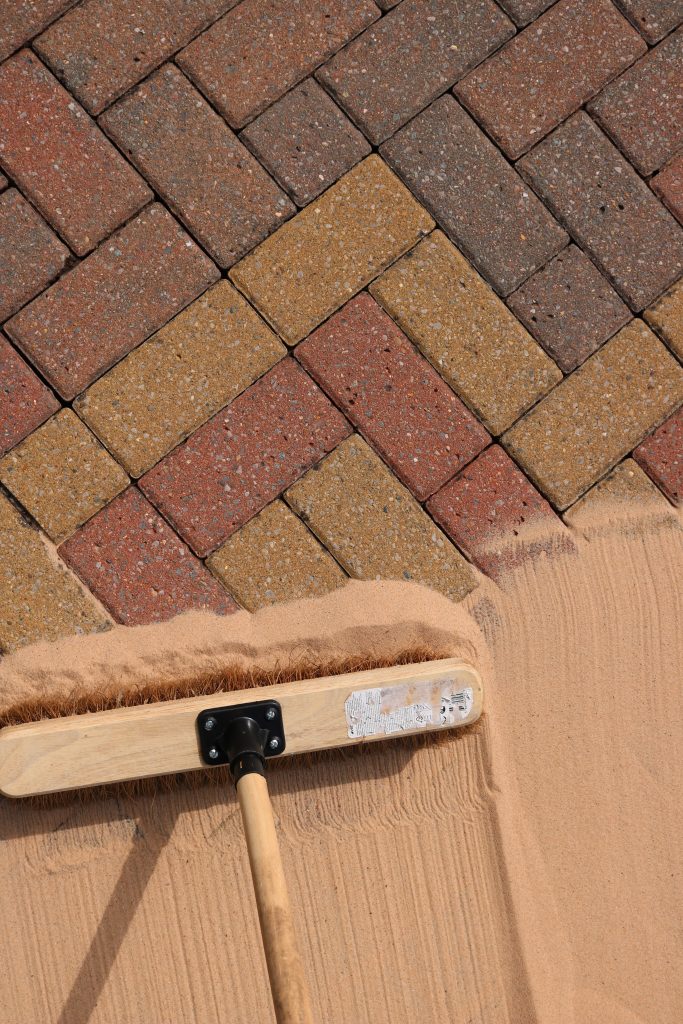
The sand is dried in a kiln to remove all the water and moisture before it is ready to use.
The sand is supplied bagged and dry. The reason the paving sand is dried is so that it will flow easily into the joints and gaps in block paving.
This way the sand flows to the bottom of the joints and does not stick to the sides of the pavers.
Why use kiln dried sand with block paving?
Kiln dried sand is used to lock individual paving blocks together. By doing this you stabilize and strengthen the paving block structure. The sand and the paving joints must be dry to allow the sand to fully fill up the joints. This way you get maximum strength when it is compacted with a compactor plate. If the sand is wet the block pavers will not lock together.
Step-by-step video guide on re-sanding block paving here
The sand in between the joints of block paving prevents water from penetrating the paved area and locks the individual pavers together stopping them from moving. If the joints of block paving are left without kiln dried sand, they may sink due to water penetration and the blocks will become loose over time.

- STABLE JOINTS GUARANTEED: Tired of shifting blocks and loose slabs; This kiln sand for block paving fills joints tightly between pavers; Locks surfaces in place; Improves stability across patios and garden paths; Professional finish
- WEED FREE LONG LASTING SOLUTION: This setting sand for patio slabs inhibits weed growth for years; Endures permeating rain without losing effectiveness; Ready to use patio filler for gaps; Gives you quality time back from maintenance

- 20kg bag
- Kiln Dried Sand (for Paviors)

- Easy-to-Spread Kiln Dried Sand: Enhance the beauty of your garden with our lawn sand that’s easy to spread. Ideal for paving slabs, our sharp sand gives a smoother finish, ensuring that your paving remains intact and beautiful.
- Prevents Slabs Moving: Our kiln dried sand is the perfect solution for your paving grout needs. It’s designed to prevent paving slabs from moving, offering a durable and stable foundation for your garden paths and drives.
It’s crucial after cleaning block paving that you replace any lost sand once the paving has dried. This is to prevent water ingress into the paving joints. Unless your paving is designed to be permeable. In which case you should not use sand but use clean graded stone chippings of between 3-6mm depending on manufacturers instructions.
Other kinds of paving joint sand available
Cost to Buy Kiln Dried Sand
Expect to pay more money for a bag of kiln dried sand than a conventional bag of building sand. This is because of the cost to dry the sand in a kiln before being bagged. The sand must also be kept indoors so it is kept dry before use.
Find out how much kiln dry sand you need with our calculator.
The amount of dry sand needed to re-sand block paving is dependent on the width of the joints and the depth of the paving type that has been laid.
We are assuming your block paving is a standard 50mm depth of paver. That you are re-applying the kiln dried sand to the joints after the paving has been cleaned. The depth of sand needed to be replaced is between 5 -10mm deep. You are most likely to be able to re-sand an area of between 15 – 30 square meters of paving with a 20-25 kg bag of kiln dried sand.
Alternative names and colours for joint sand
Different businesses use different brand names for the sand you would use for the joints in block paving. A few of the names used would be Silver sand, Silica sand, jointing sand, pavior sand and dry aggregate sand. You can buy the sand in various colours, grey, natural white, buff, silver and yellow. Although it can be difficult to source a particular color of dry sand. An example would be Silver coloured kiln dried sand. This is only supplied by one producer in the whole of the UK to our knowledge.
Manufactures & Suppliers
You can buy dried sand from some of the many UK companies that manufacture kiln dried sand. Many of the larger paving manufactures that supply paving will also produce their own brand of sand for their paving. Some of these are Marshalls, Tarmac, Hanson and Lafarge.
Most DIY stores and online shops will also have their own version of dry paving sand you can buy in store that has been branded with their own name on the bag. Wickes, Jewson, B&Q, SimplyPaving and Homebase do this and sell in store with click and collect or online.
Protect the loss of joint sand by applying a sealant or sand stabilizer
It may be worth considering applying a sealer to set your paving joint sand hard. Alternatively you could apply a sand stabilizer if you don’t want a sealer applied. Joint stabilizers work by setting the sand hard but will not seal the surface of your paving.
Important We have had a lot of inquiries as to whether you could use beach sand as an alternative to kiln dried sand. Well our answer would be not to use beach sand. This is because beach sand contains a lot of salt. The salt will be released by the sand over time and may lead to your block paving joints getting efflorescence on the surface. Efflorescence can become difficult to remove. You could wash the beach sand first you may release all the salts from the sand but there is no guarantee. And it will be making a lot of work for yourself.
The next generation of block paving joint sand is here
If you would like to know more information about a new revolutionary kiln dried sand that contains an inbuilt weed killer then please have a look here
You can find information including a video on how to apply kiln dried sand to block paving here